
Victory in the World Anti-Fascist War, 80 Years On
To mark the 80th anniversary of Japan’s defeat in World War II, Qiao Collective is pleased to publish transcripts from two recent interventions into the roiling debate over its historical legacy. Together, these pieces invoke the defeat of Japanese imperialism not as a static historical event, but as a touchstone of anti-imperialist struggle for national liberation that can and must be reinvigorated today.

Our Comments to The Nation
In light of the selective reporting of The Nation’s recent article on China and the U.S. left, we have published our full comments as an invitation for readers to engage our work on its own terms.

Can The Chinese Diaspora Speak?
The political speech of the Chinese diaspora has a long history as a site of critique and co-optation by U.S empire and its enabling discourses. Amidst a new apex in Cold War Sinophobia, we trace the discursive circumscription of “overseas Chinese” as a political category, from Qing-era anti-colonialism to 20th century Cold War liberalism and beyond.

Reflections on the Communist Party of China’s Centenary
On the occasion of the 100 year anniversary of the Communist Party of China’s founding, we share comments solicited from our Weibo followers reflecting on the historic juncture.

Why China’s Vaccine Internationalism Matters
As rich nations stockpile COVID-19 vaccines, China is providing a lifeline to Global South nations spurned by Western pharmaceuticals and excluded by the West’s neocolonial vaccine nationalism. So why is China being smeared for its efforts?

Race Reductionism: Neocolonialism and the Ruse of “Chinese Privilege”
Recent discourse within the U.S. and Singaporean liberal-left has championed “Chinese privilege” as an analytic of power within Singapore and Asia at large. By invoking a Chinese equivalence to whiteness, analyses of “Chinese privilege” not only disavows the material history of racial capitalism in Asia, it appropriates Black and Indigenous critiques of white supremacy to bolster a long history of Singaporean anticommunism in service of U.S. military and ideological supremacy over Asia.

Raising Their Banner High: Fascism, Imperialism, and Anti-Communism at the Capitol Hill Riots
The flags of U.S. client states and anti-communist regimes dotted the sea of MAGA hats and Confederate flags at the pro-Trump Capitol Hill mobs on January 6th. Making sense of why requires understanding the convergence between imperialism abroad and fascism at home.
What Does Critique Do? — On the Critical Predation of China
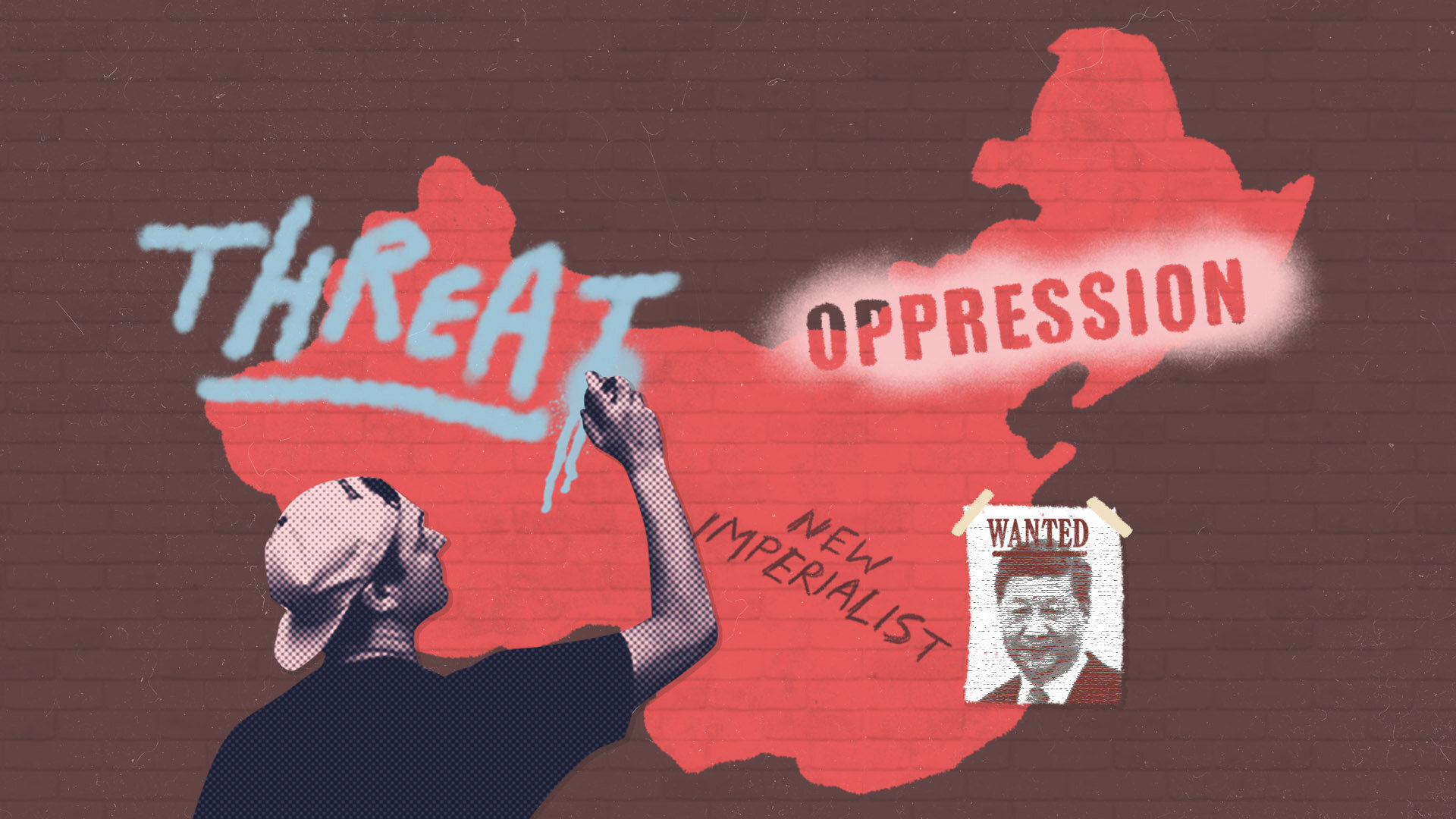
The Western left has largely fallen in line behind interventionist platitudes of “standing with the Chinese people, not the Chinese government.” But their cover of “principled critique” elides the fact that criticism does not exist in a vacuum. In this case, it is greasing the wheels for Western imperialist intervention under the auspices of a “new” Cold War.

The End of Engagement
New Cold War aggression on China is bigger than Trump or Biden. A long-term view of the imperialist assumptions behind the era of engagement initiated by Nixon make clear: for Washington, real bilateralism premised on China’s sovereignty and the legitimacy of its socialist system has never been on the table.

Sinophobia Inc: Understanding the Anti-China Industrial Complex
Armed with state funding and weapons industry sponsors, a handful of influential think tanks are setting the terms of the New Cold War on China, propelling the U.S.-led alliance towards a disastrous conflict at the expense of the rest of us.

On Inner Mongolia and Bilingual Education in China
Changes to Inner Mongolia’s bilingual education policy have hit Western China-watching circles, prompting dramatic and misrepresentative claims of cultural erasure.
We investigate government documents from the autonomous region to set the record straight.

A Cold War Crossroads for the EU
As the U.S. declares the era of engagement with China a “failure,” the EU has a choice: adopt the belligerent U.S. path to conflict, or pursue independent relations with China as equals.

The U.S. Tech War on China: A Battle for Economic Sovereignty
The Trump Administration’s forced sale of TikTok is part of a broader effort to thwart Chinese economic independence in the tech sector

Anti-China Hysteria Drives Record 2021 U.S. Defense Spending
Under the cover of an imagined ‘China threat,’ the 2021 National Defense Authorization Act continues to devote bottomless funding to endless war and militarization while neglecting its own people.
The Fallacy of Denouncing ‘Both Sides’ Of The U.S.-China Conflict
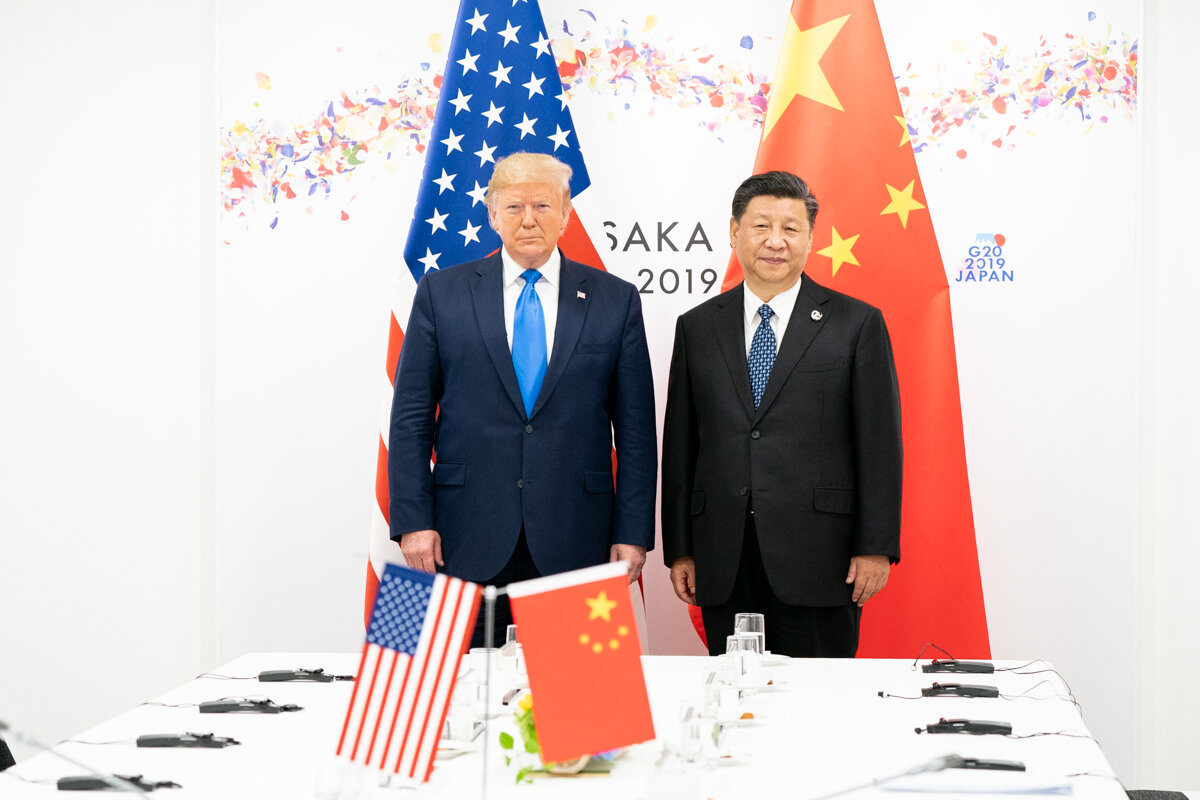
In order to challenge the United States’ New Cold War on China, we must abandon the “neither Washington nor Beijing” false equivalencies and work to disrupt the U.S. war machine at every turn.

A Note on the Tiananmen Protests
A note of reflection on the June 4th Tiananmen protests written by three members of Qiao Collective whose families were closely involved in the June 4th Tiananmen protests.

“We Are Trying to Build Humanity”—Vijay Prashad on Chinese Socialism & Internationalism
Qiao Collective talks with Vijay Prashad on COVID-19, China’s pandemic response, and the spirit of Chinese socialism and internationalism in the face of rising U.S. hegemony and aggression.

After the West: China’s Internationalist Solidarity in the Age of Coronavirus
China’s socialist state production and global cooperation is equipping the world with the tools to fight coronavirus, offering a vision of a world without Western hegemony

How Chinese Socialism is Defeating the Coronavirus Outbreak
China is marshaling state-owned industries and market controls to stop the coronavirus outbreak—providing a global demonstration of the strengths of socialism with Chinese characteristics.

Connecting the Dots: Iran, China, and the Challenge to U.S. Hegemony
China is providing a crucial economic and political lifeline for Iran and other nations targeted by U.S. sanctions. The United States’ so-called “trade war” against China could change that.